Meet Mobile Apps: Full-cycle Mobile Development Agency
In a recent article, we introduced our audience to the Performance Agency, and today it's time to present another key project of the EVADAV TRAFFIC GROUP holding – Mobile Apps.
What is Mobile Apps?
EVADAV Mobile Apps is an agency that develops and promotes hundreds of mobile apps and products for millions of users worldwide. The media buying division gets traffic from over 150 sources for products in the Utilities, AI, Tools, and Entertainment categories.
Mobile Apps is divided into departments based on the tasks solved:
-
App Studio creates and develops mobile apps. The team researches the market, identifies product ideas, creates and improves them. Over 80% of products are designed for iOS and use a subscription model. The company's portfolio currently includes over 50 apps for Apple and Android devices, as well as a line of web products. The department includes a media buying team that purchases traffic from over 150 sources: social platforms (Bigo, X, YouTube, Snapchat, Pinterest, Discord, Likee, Kwai), in-app networks (AppLovin, Unity, Mintegral, and dozens of others), and alternative sources (push, pop, display, native, SMS, etc.). We also work with Apple and Google Search and have our own separate project within the holding – an advertising network with unique placements and websites (Ad Network).
-
Apps Factory specializes in media buying and web funnels (Web2Web and Web2App). Its primary responsibilities include market research, hypothesis development, and web product development. The team builds custom solutions with a dynamic subscription model to achieve effective monetization over time.
-
The creative studio is one of the main growth drivers for the Mobile Apps division. Specialists analyze the market, competitors, and user behavior to create and test millions of creatives monthly, adapting them to different platforms and audience segments.
-
The user acquisition team purchases traffic for web products from various sources (Meta, TikTok, Google, Display), optimizes and scales campaigns.
-
Consulting and Operations Support is a department that covers business tasks: finance, legal support, recruiting and HR, marketing, business development, operational management and control, and technical support. This allows product and marketing teams to focus on improving metrics and launching new hypotheses, without being distracted by operational processes.
At Mobile Apps, we use the same approach as the entire EVADAV TRAFFIC GROUP holding company – building systemic growth with controlled economics through well-established processes and a reliable infrastructure. Development is driven by values at the company’s core:
Results, Growth, Consistency, Team
The Mobile Apps team currently employs dozens of people, spread across several areas. In this article, we'll take a closer look at two key teams: App Studio and Apps Factory.
App Studio: Development and Product Expertise
App Studio is where products are crafted from concept to finished app. The team is responsible for the full development cycle:
-
Market and trend analysis
-
Product research
-
Hypothesis formation
-
Application development
-
Product support and growth
-
Traffic acquisition (media buying)
-
App monetization
We combine cutting-edge development technologies with our own established infrastructure and well-organized in-house processes. This allows us to quickly launch products, scale effectively, and control quality throughout the entire product lifecycle.
Development starts with in-depth analytics: the team studies the market, competitors, and benchmarks, then identifies product ideas that will most effectively address the needs of the audience.
After creating a detailed roadmap, the development team gets involved. From the start, all products are designed to:
-
solve user problems
-
attract paid traffic
-
implement subscription-based monetization
-
be scalable
Focusing on subscription-based apps, we choose verticals where this model can be implemented most effectively.
The primary focus of App Studio is on Utility applications:
-
VPN
-
Cleaners
-
Ad Blockers
MixVPN is a good case in point – it’s one of the studio's top products. The app is available for both iOS and Android and has over 10 million downloads.
The app offers several key features: a strict "no logs" policy, a multi-hop feature for improved anonymity, and a kill-switch mode to protect data in case of connection loss. The product stands out in the market with its adaptive server selection and multi-routing, making it more reliable in case of frequent blockages.
In addition to Utilities, products are also created in other niches:
-
Health & Fitness: Apps to improve quality of life, including habit trackers, workout plans, diet programs, and services for diagnostics and health management.
-
Crypto: Trading education, analytics, signals, and decision-making tools.
-
Education: Educational products that help users acquire new skills, from language learning and soft skills to specialized knowledge through interactive courses and tests.
-
Entertainment: Entertainment services such as horoscopes, quizzes, puzzles, and personalized content focused on user engagement and retention.
-
AI Products: Apps with AI assistants that help solve everyday tasks, from content generation and answering questions to providing personalized recommendations and automating routine actions.
Currently, the team’s portfolio includes over 50 products with a total of over 100 million installs.
Examples of our apps in different categories:
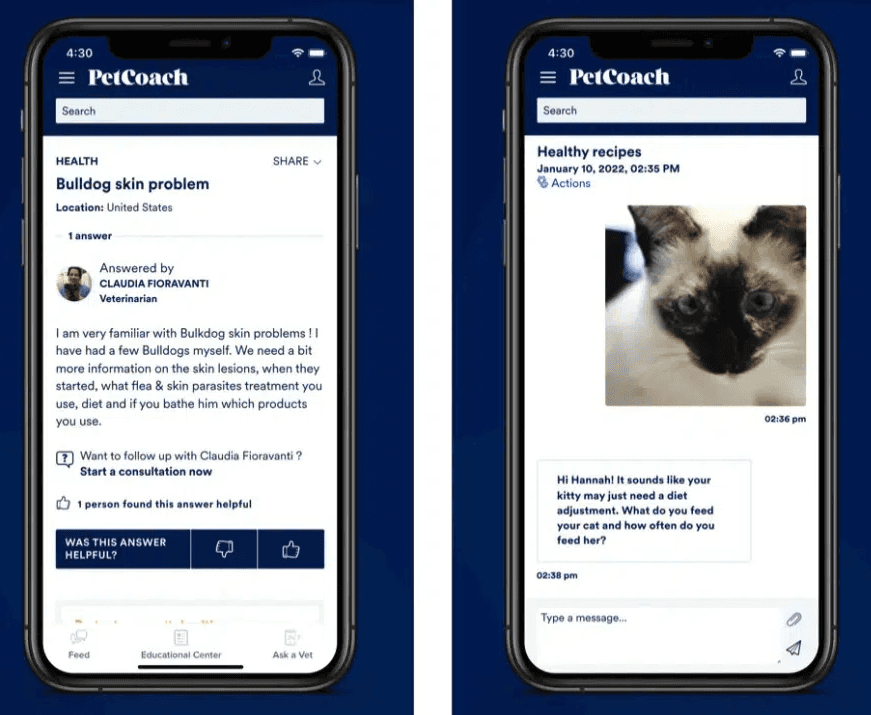
Pet Coach (Health)
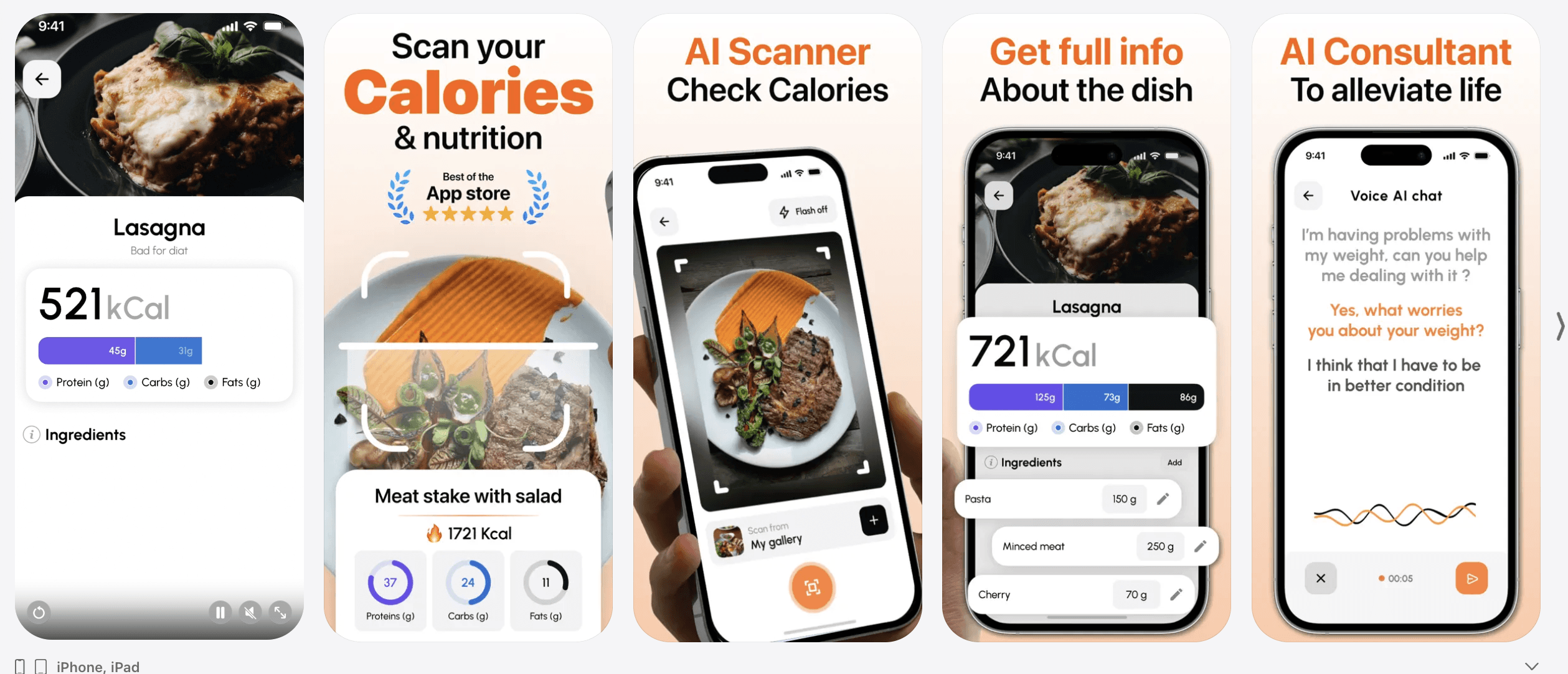
Smart Calorie AI (Health & Lifestyle)
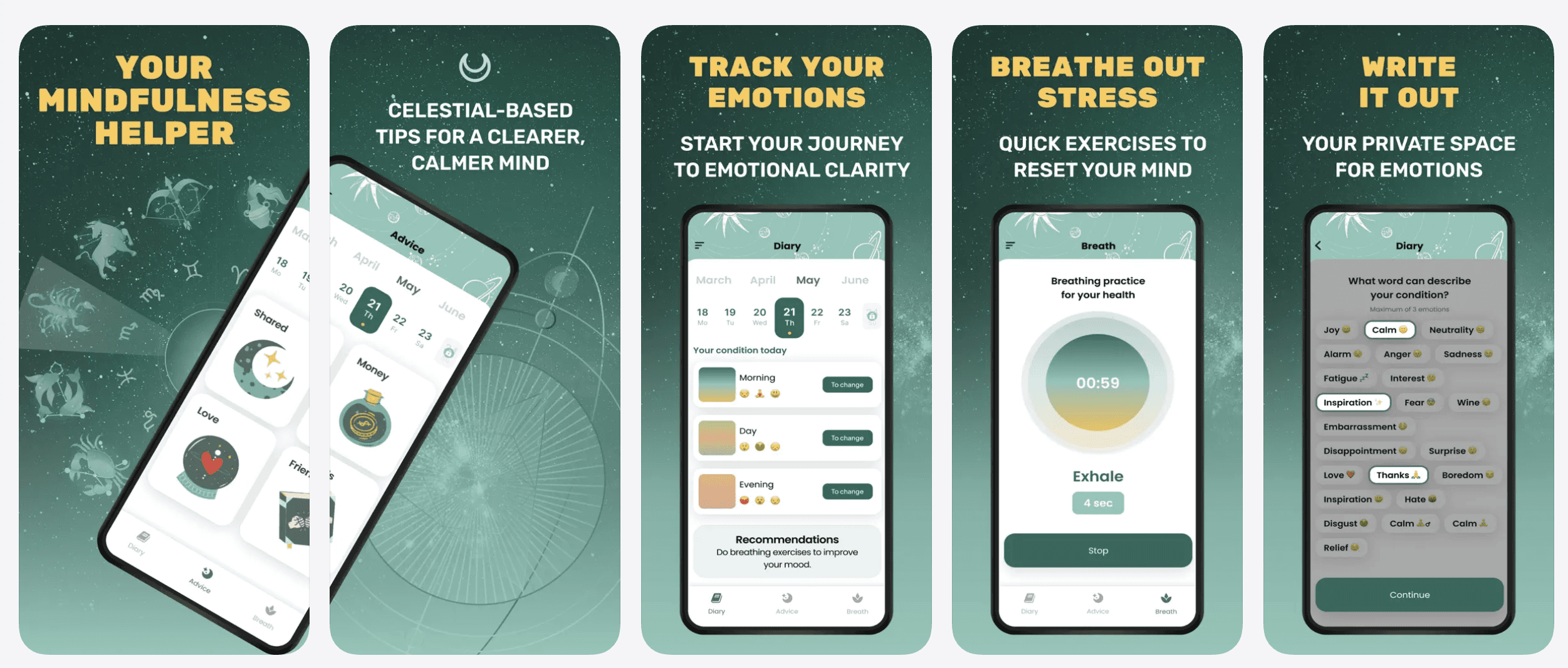
JyotAI (AI & Entertainment)
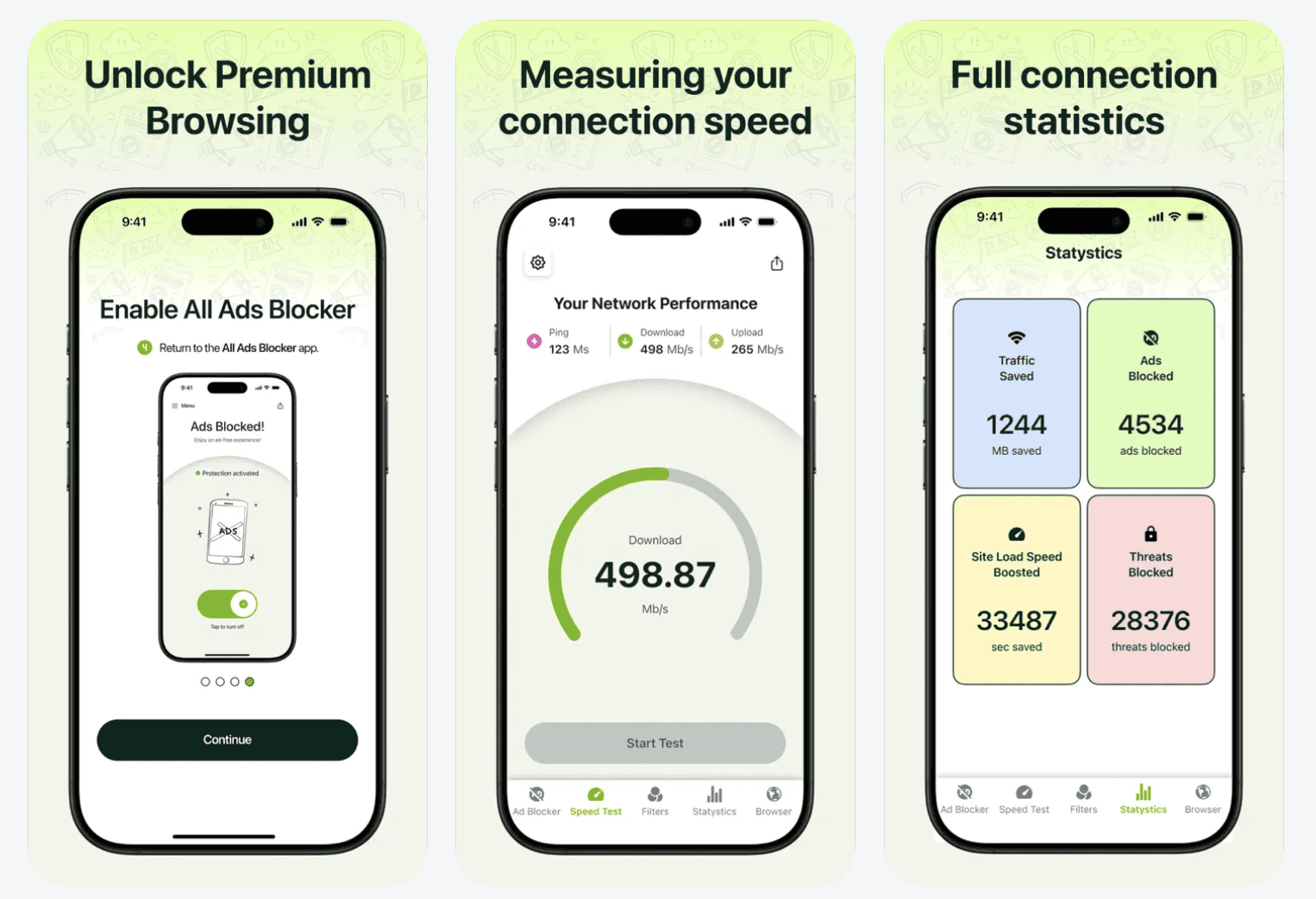
All Ads Blocker (Utilities)
App Monetization
App monetization at App Studio is based on a subscription model. In this case, the user gets access to basic or limited functionality for free, after which they are offered a subscription. During this time, the user gets familiar with the product and its functionality, and then automatically transitions to a paid plan (weekly, monthly, or yearly).
In our case, the lead journey is as follows:
-
Free trial (usually 72 hours).
-
Then paid subscription (weekly/monthly/yearly).
-
Subscription renewal.
The main revenue comes from subscription renewals, so retention and product quality play a key role: the longer the user stays in the service and continues to pay, the higher their LTV and the overall profitability of the app.
Media Buying Department
The Media Buying department in Mobile Apps builds a systematic approach to mobile traffic, where the key task is to find and scale profitable traffic sources.
The process starts with a product hypothesis: based on the analysis of the market, competitors, and trends (using tools like SensorTower, AppMagic, and SPY services), experts understand which offers have potential. Then, they generate, find suitable angles, and test various funnels.
Our media buyers have strong expertise in traffic acquisition across a broad pool of sources (over 150). We have access to alternative channels (push, pop, display, redirect, native, SMS), as well as classic platforms (AppLovin, Unity, Mintegral). This way, we can always find efficient solutions and scale them.
Traffic Sources
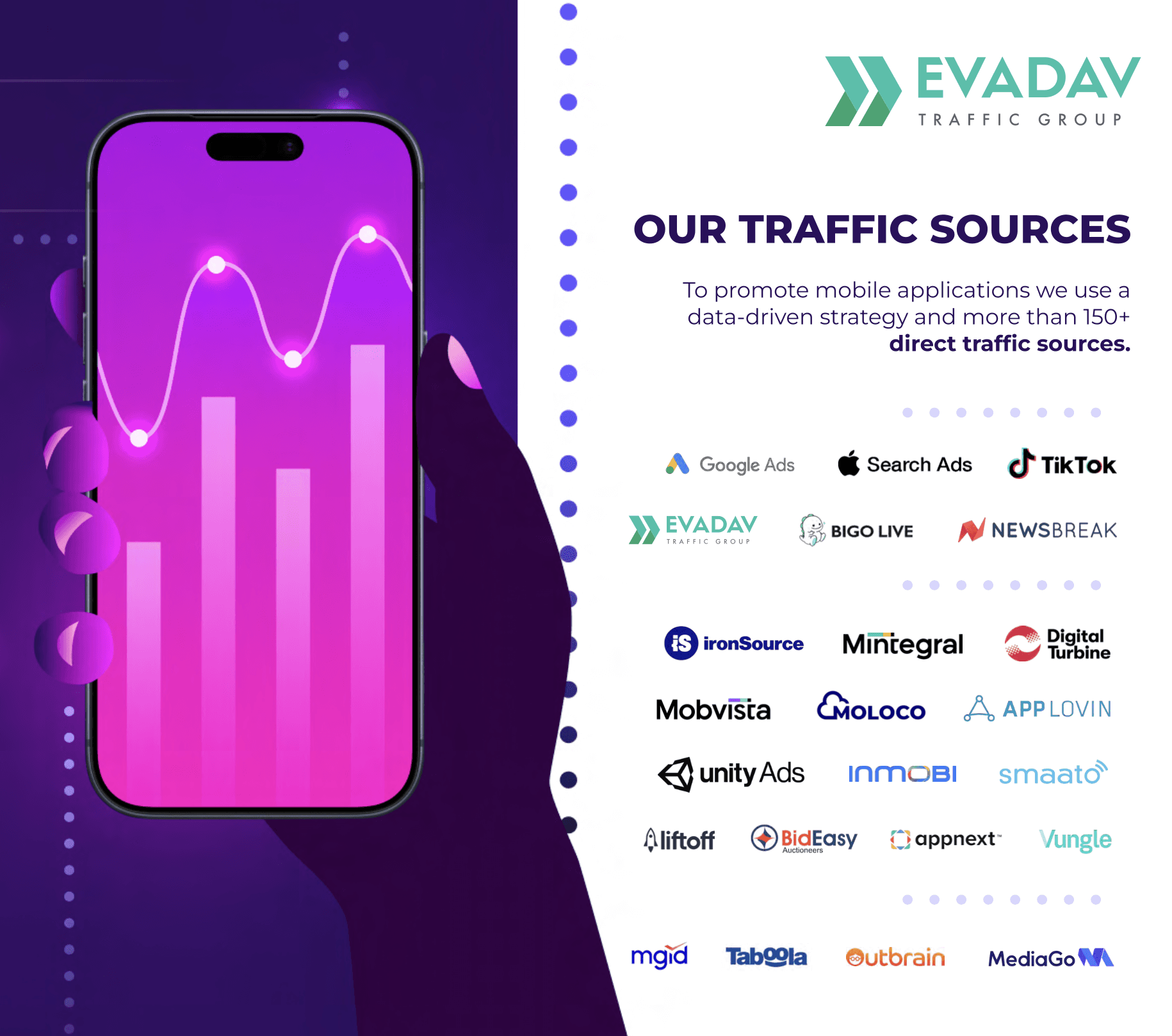
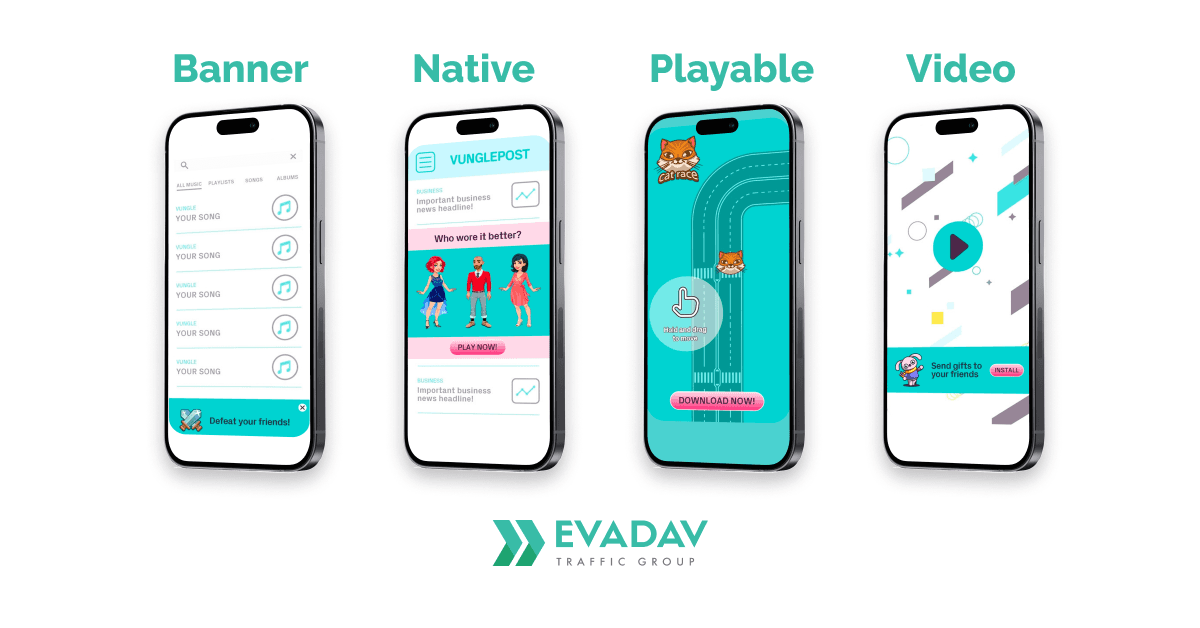
Above, you can see our key traffic sources, but the list is not limited by those partners. Here are more examples:
Banner, Native, Playable, Video
Push

Native
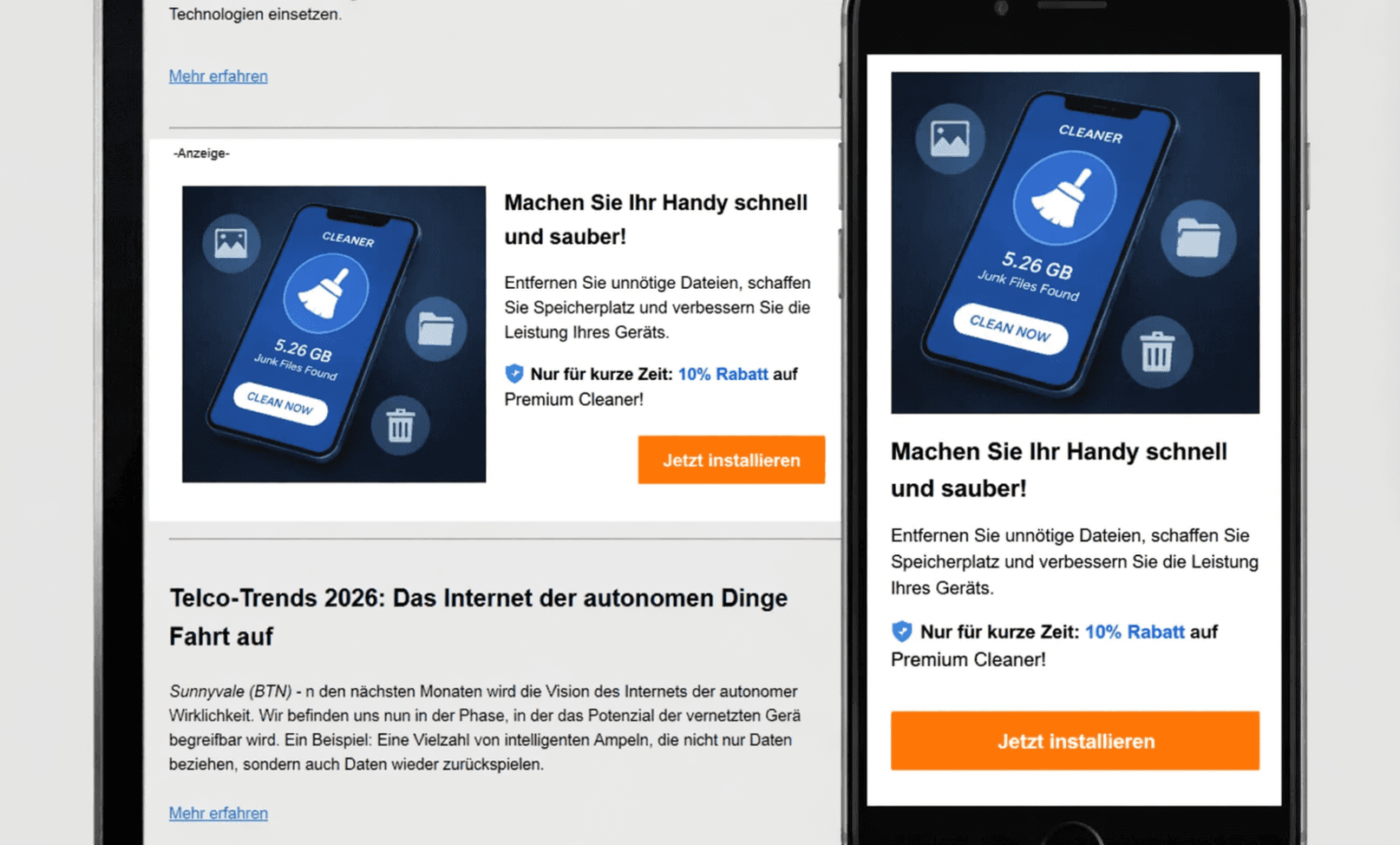
InPage
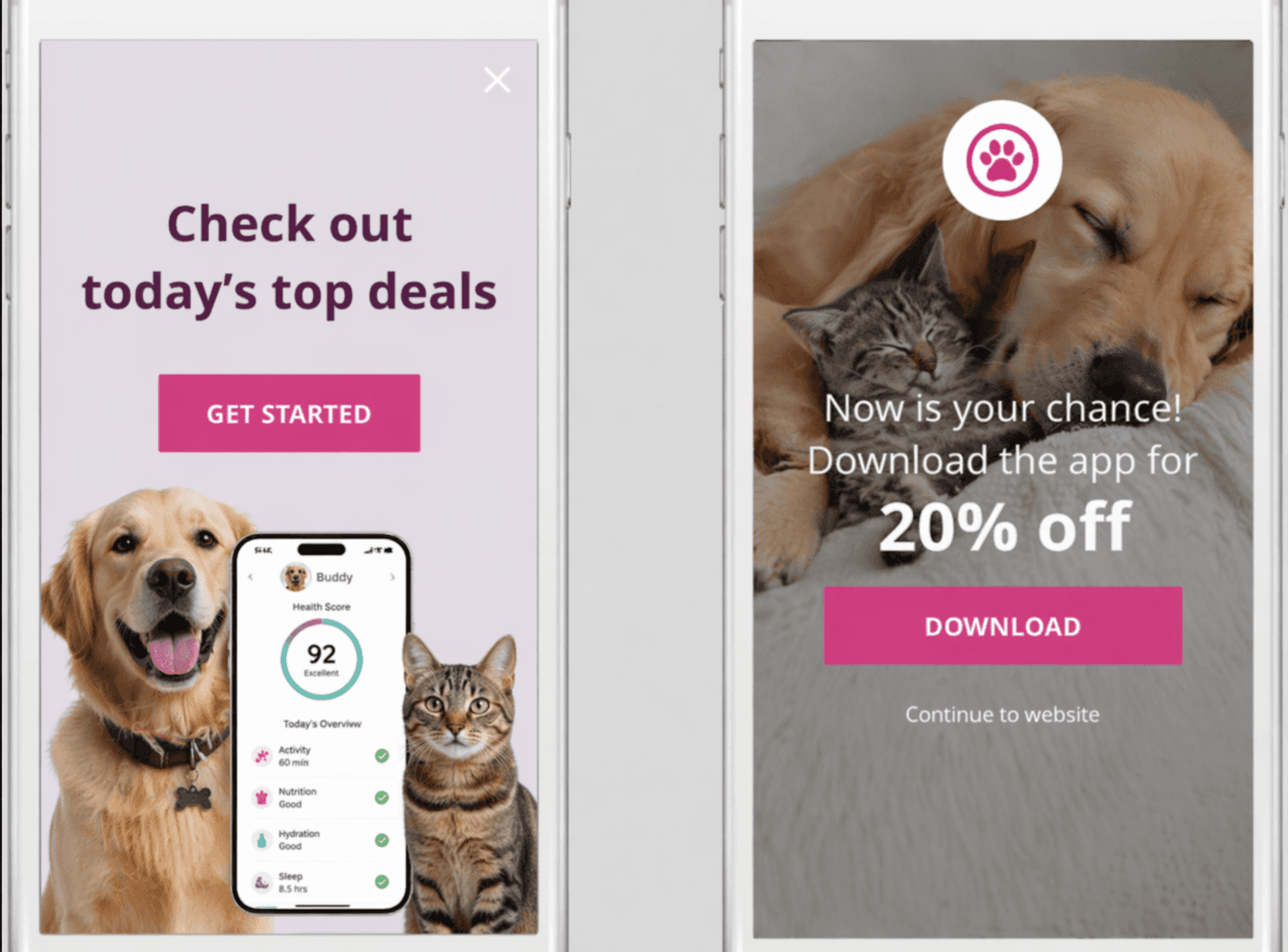
Interstitial
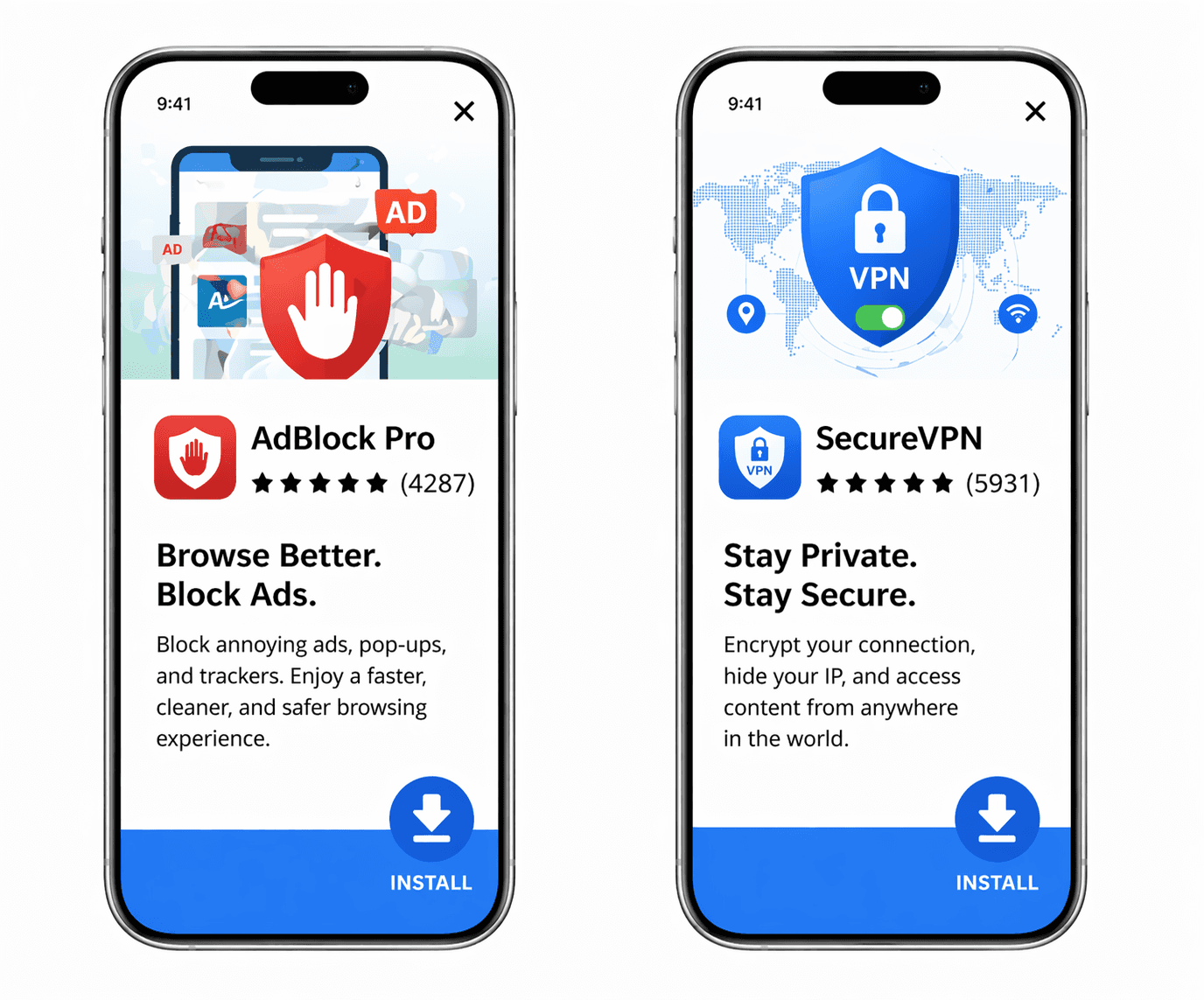
Social
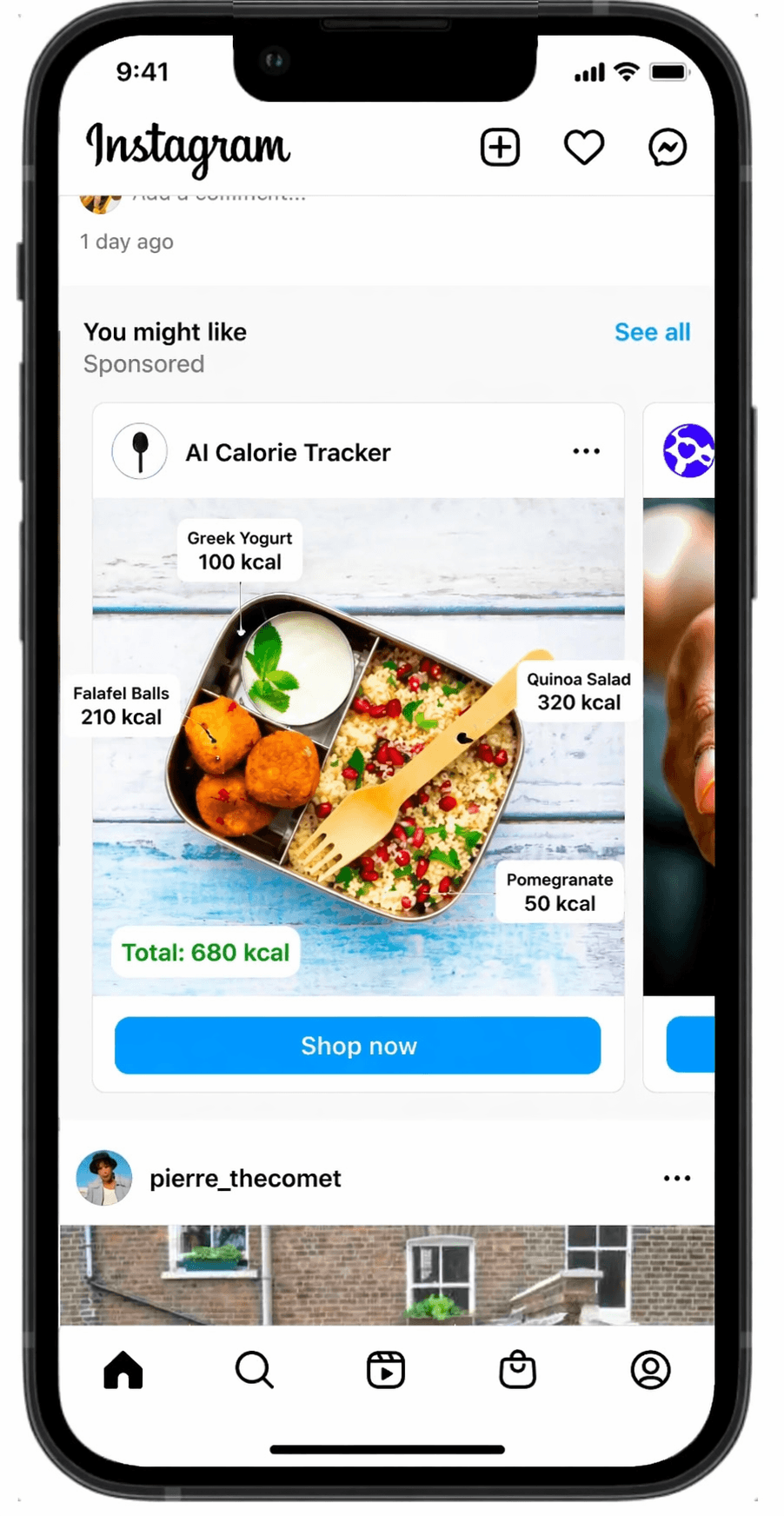
Search / InApp
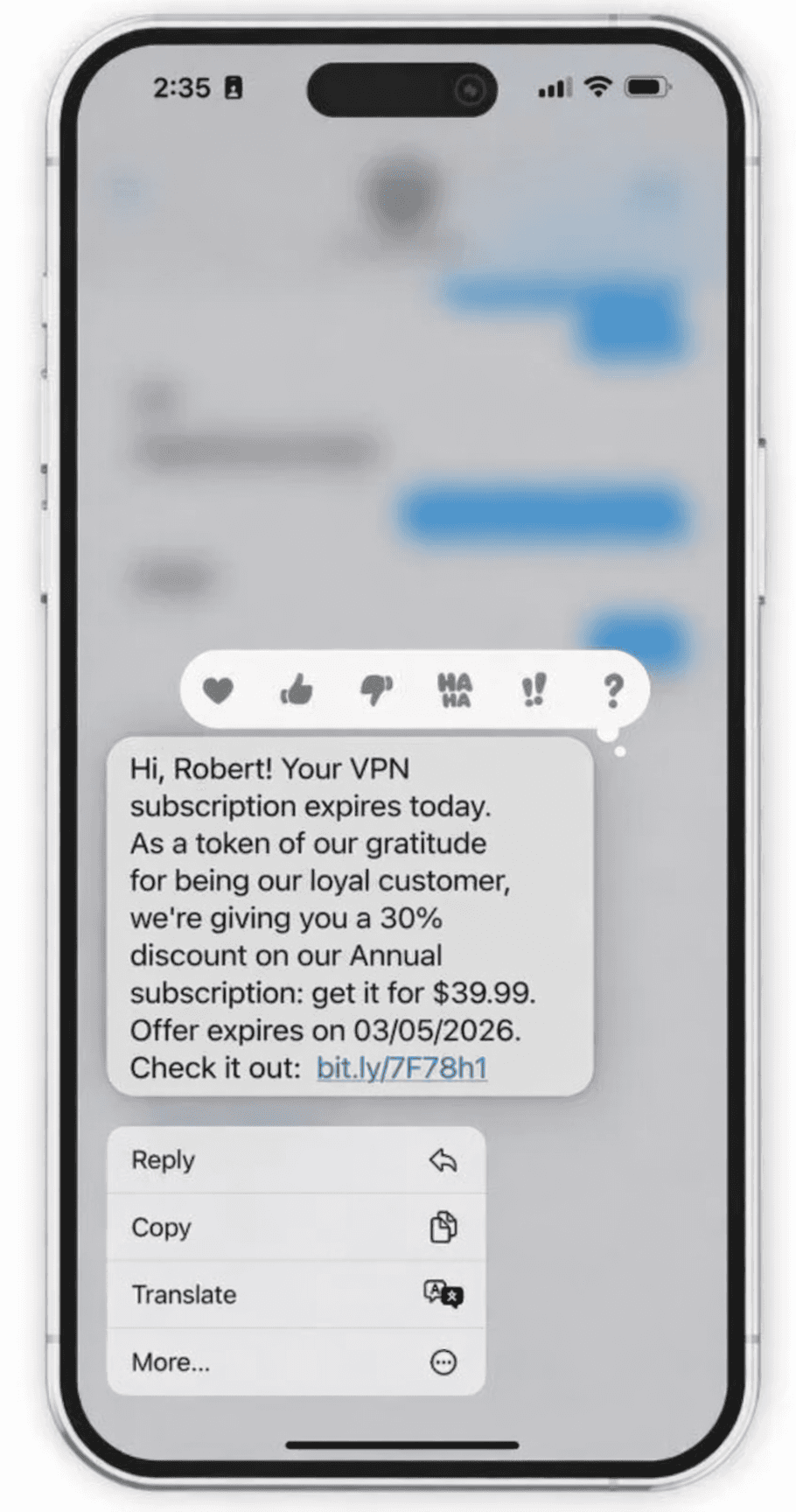
SMS
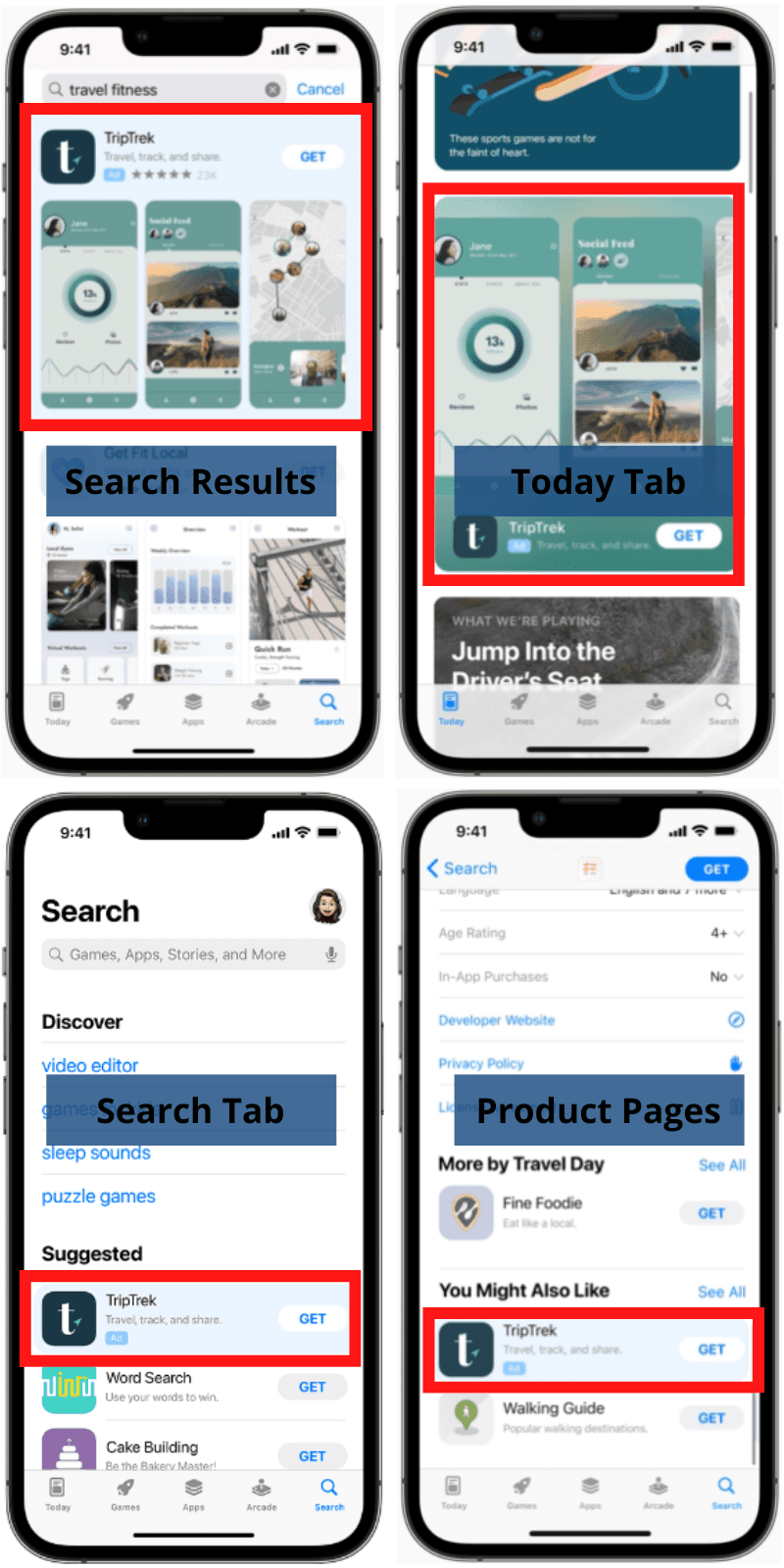
Apple Search Ads and Google Display Network
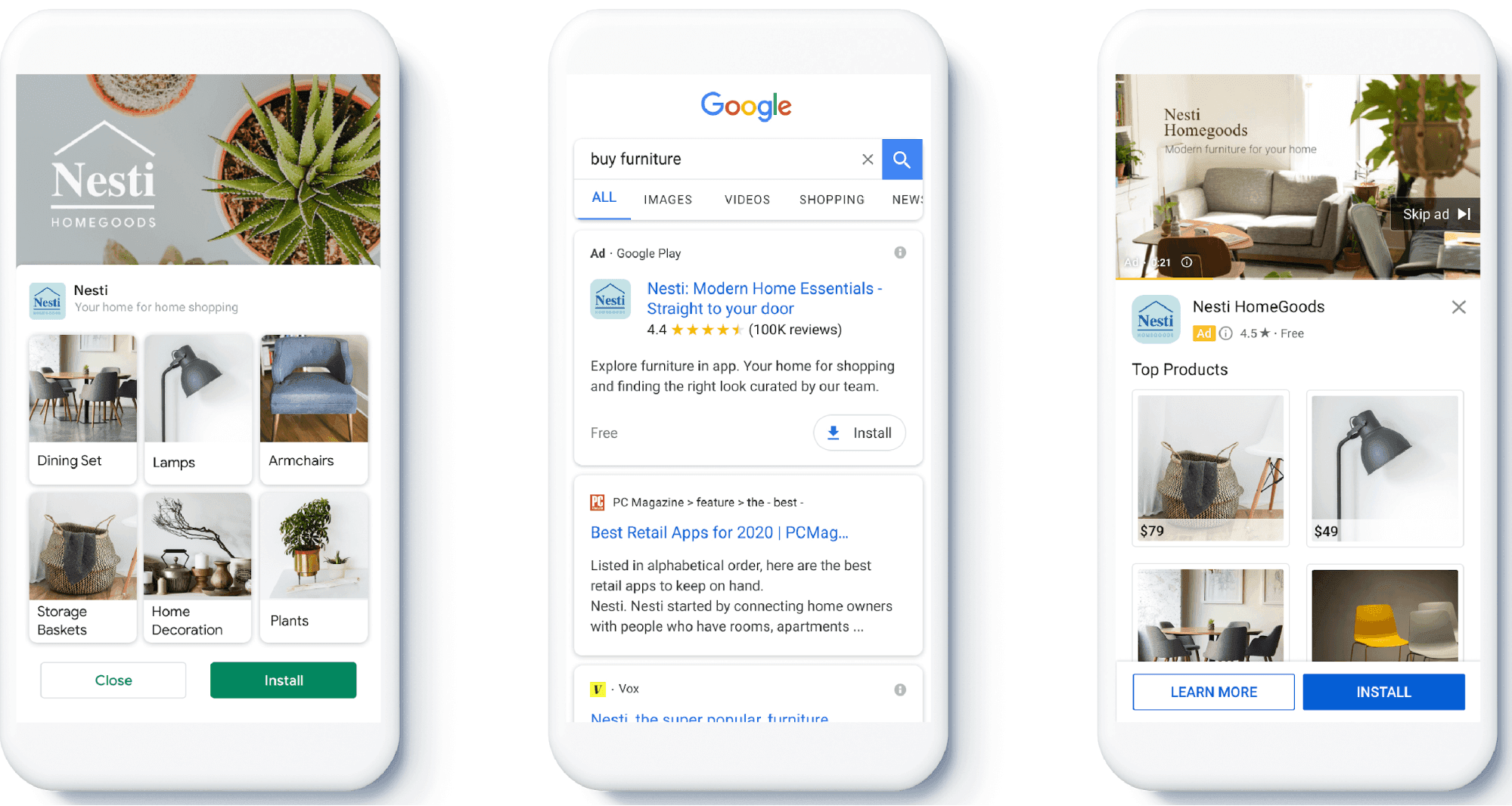
TikTok Ads
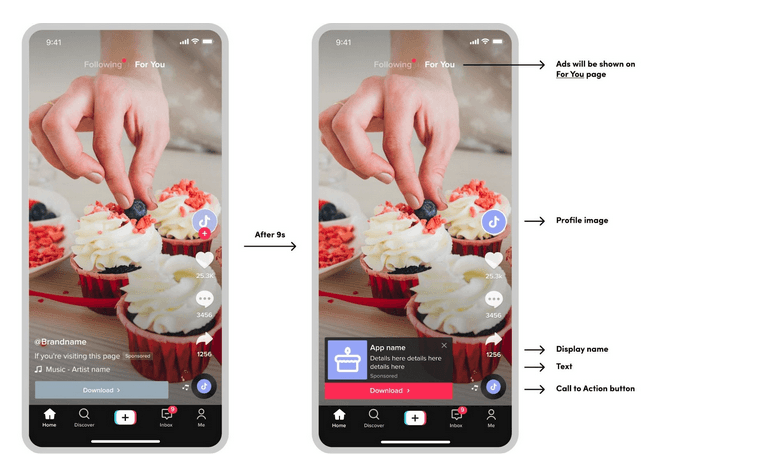
The diversity of traffic sources helps us quickly scale successful campaigns.
Also, media buyers in Mobile Apps have access to the advertising network within EVADAV TRAFFIC GROUP, and collaborate with key partners of our holding. A case in point is the Hidy VPN project: in collaboration with the NewsBreak traffic source (Top-1 News app in the US in 2025) team, we managed to reduce the initially planned CPI by 29%.
If you have any questions about collaboration, please contact Ryan Ludlow (GM NewsBreak Ads): [email protected]
Apps Factory: Web2App and Web2Web Funnels
While App Studio handles development, the Apps Factory team focuses on effectively attracting users to apps and web services through Web2Web and Web2App funnels. The team acquires traffic from such sources as Meta, TikTok, and Google, tests hypotheses, various creative solutions, and business ideas. All processes are built with a high level of automation and analytics, which allows the agency to be flexible and responsive in decision-making. For detailed analytics of creatives and campaigns, we leverage our own in-house platform, which we discuss further below.
The Apps Factory team focuses on:
-
testing hypotheses
-
scaling successful connections
-
monetizing users through funnels
Web2App is most often used for Utilities apps, while Web2Web is used for apps and web services in such verticals as Utilities, AI, Entertainment, and Lifestyle. Let’s take a closer look at both funnels.
Web2App
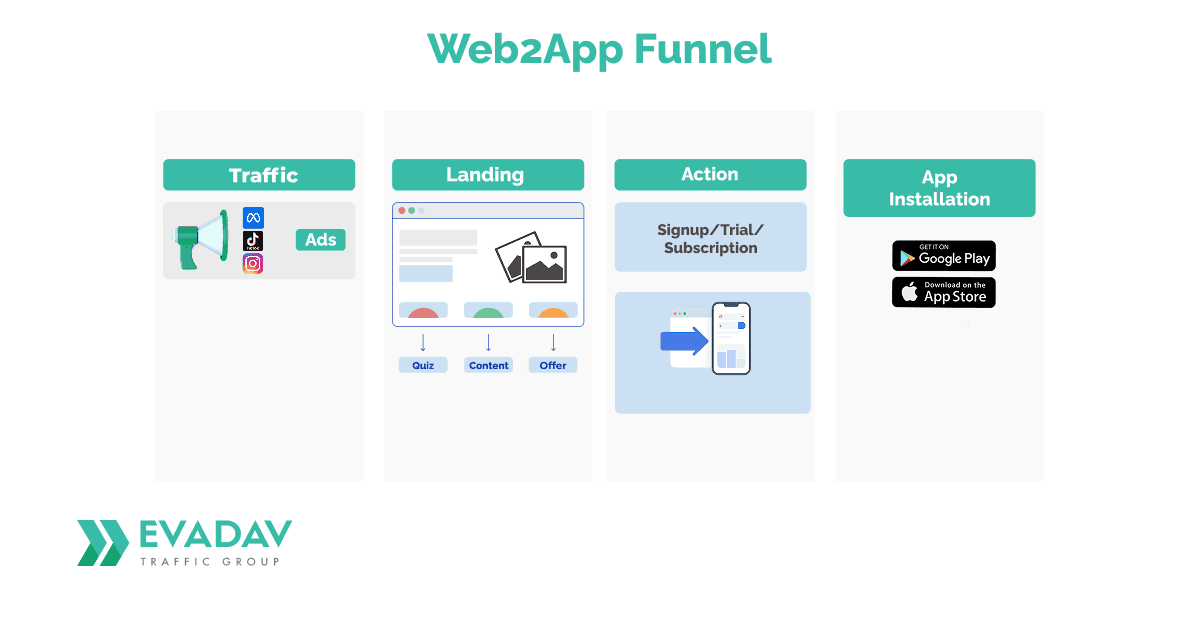
The user journey in Web2App funnels looks as follows:
-
Attracting traffic. The user sees an ad on social media (TikTok, Instagram) or types a query in a search engine and clicks through to the website.
-
Interaction with the landing page. On the website, the user gets familiar with the product: they take a quiz, explore the content, or see an offer that addresses their needs.
-
Target action. The user gets a trial or purchases a subscription directly on the website.
-
Installation. The user is redirected to the App Store or Google Play to download and install the app.
Web2App funnels are used to better segment and “warm up” the audience before installation, increasing conversion to payment and LTV. They also work well for retargeting because users’ first interaction through the browser provides an opportunity to gather data about their behavior (views, clicks, interests). Based on this, we can return them with a personalized offer through advertising and lead them back into the funnel, either to the web or directly into the app.
Web2Web
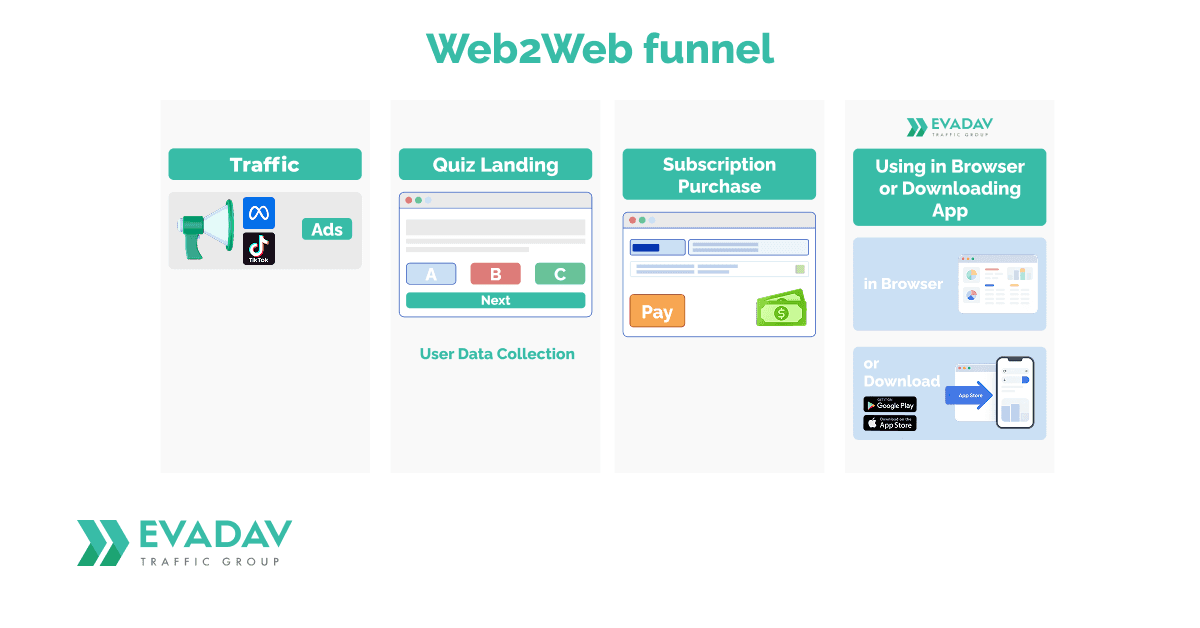
Web2Web funnels appeared in 2016-2017 during the growth of subscription economies and performance marketing. Initially, they were used as a quick way to test demand and monetize an audience through the web, but later, due to growing app store commissions and subscription models, they became a full-fledged tool for launching and scaling digital products. Today, such funnels are widely used in subscription verticals where flexible monetization, fast hypothesis testing, and control over the user journey are important.
Web2Web differs from Web2App in that the target action is completed: in Web2Web, users buy subscriptions in the browser instead of an app store.
Here’s how it works:
-
Attracting traffic. Ads on various platforms, like Meta and TikTok, direct users to a landing page.
-
Quiz on the landing page. After clicking through to the landing page, the user is prompted to take a quiz with 10-30 questions. The goal of the quiz is to gather information about the lead and offer the most suitable product. This step allows customization of the product to the user’s needs.
-
Subscription offer. After the quiz, the user is offered a free trial (for example, 72 hours) or a paid subscription. Subscription payment is completed on the web, after which the user immediately receives access to the service. In some cases, the app installation is not even necessary, as the product can be accessed via the browser.
-
Service use. The service is then either used within the app or directly in the browser.
When a user pays in an app store, iOS app developers are forced to pay Apple a 30% commission on each subscription payment. However, this can be avoided if the user pays for the service via the web – this is why Web2Web funnels have become popular. Apple officially allows the use of external web pages for subscription sign-ups (for example, via External Link Account Entitlement), enabling users to transition from the web to the app after payment.
Aside from cost savings, Web2Web is ideal for faster hypothesis testing, launching, and deactivating products and offers without developing an app. It is also easier to manage pricing, offer packaging, and upsells on the web, so users have more options to choose from, they can select a convenient option, and are more likely to prolong their subscription.
Product Development & Advertising
As we’ve already mentioned, the Mobile Apps team is oriented on the market, not just the concept of a finished product. Instead of first developing a project and pumping it with traffic, we estimate demand and its potential.
The team starts with research: we define the most popular and profitable products, and then propose ideas for their development. Generated hypotheses go through several validation and evaluation stages by the following specialists:
-
The product manager analyzes the idea from a feasibility standpoint.
-
The product marketing manager evaluates the idea from the perspective of marketing, traffic, and web purchases.
-
The user acquisition (UA) manager assesses the potential to attract users.
-
The creative producer develops creative concepts for promotion.
-
The developer assesses the technical feasibility of the idea.
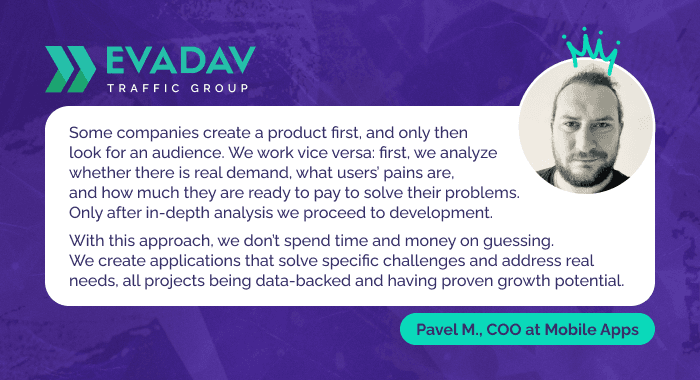
Each of these specialists follows defined criteria and, based on market benchmarks, determines whether it makes sense to develop the project. At each stage, the process is controlled by the COO of Mobile Apps, Pavel M., whom we mentioned above.
Once the idea gets validated, the team creates an MVP (minimum viable product). Products are developed iteratively within limited time frames, which allows minimizing risks and quickly testing hypotheses. For every campaign, we develop different "angles", i.e., approaches to selling or promoting the product. These angles are tested using web funnels (including quizzes, landing pages, videos).
A similar approach is used in ad campaign management. Every product and advertising campaign is tested using clearly defined metrics and indicators, which minimize subjectivity and help us manage budgets efficiently. When the campaign passes the acceptance gate, it goes into further iterative development. User acquisition specialists buy traffic: their expertise and advanced instruments help manage the budget for millions of monthly installs.
To evaluate project success, we rely not only on our experience and expectations but also on current market benchmarks. For example, here are the statistics for Utilities apps from the 2026 report by Adapty:
-
$68.9 – average LTV of users in Utilities in the first year, one of the highest among all categories
-
22.1% – retention of users after one year for annual subscriptions, making this vertical stable for the long term
-
+60% – increase in the first renewal of subscriptions when using a trial model
-
55.5% – share of weekly subscriptions in total revenue, indicating a shift toward short payment cycles
-
+636% – growth in LTV when using a trial (from ~$7.4 to ~$54.5), which is critical for unit economics
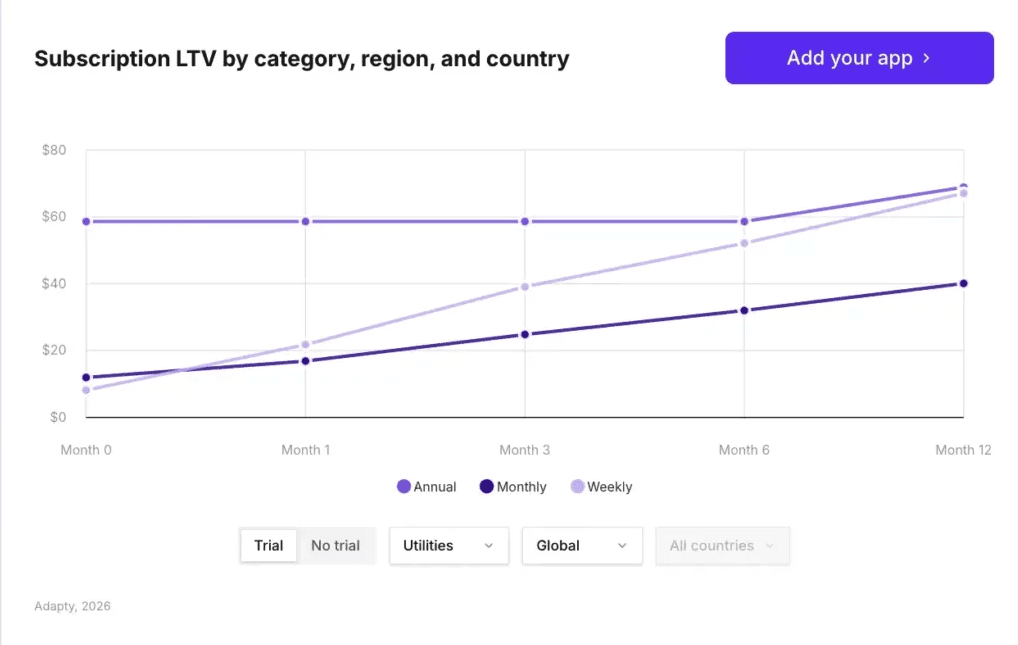
While working on campaign improvements, we have achieved these indicators and often exceeded them multiple times.
Creatives – The Key to Success
With the development of algorithmic solutions like Meta’s Andromeda, the role of traditional targeting is rapidly declining: today, the system relies less on manual settings and more on creatives. Algorithms analyze visuals, text, editing, dynamics, and format, trying to predict which audience it will be relevant to. The system can also analyze the audience's reactions to the creatives, the advertised product, and even reviews about it.
At Apps Factory, millions of creatives are made and tested monthly for various ad campaigns. This becomes possible thanks to automation tools and well-established processes within the company. Creative producers play a crucial role in this process, conducting detailed market research and determining in advance which hypotheses are worth testing.
Through experiments, we found that the best-performing ads are those that look native to the platform: short dynamic videos, user-generated style, a hook in the first seconds, a clear value proposition, and a simple, easily readable structure.

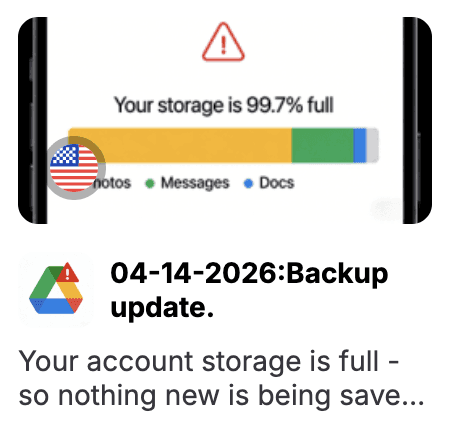
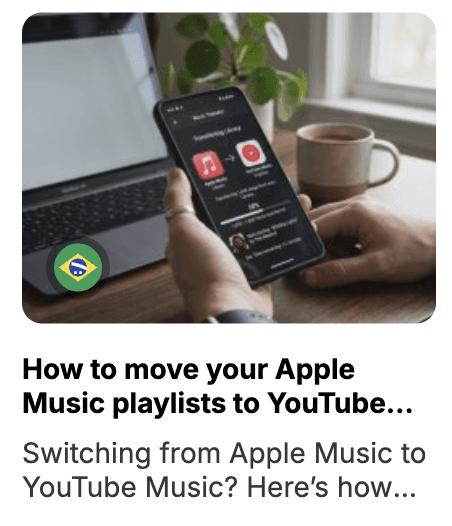
Algorithms also favor creatives with high engagement: attention retention, views, clicks, reactions, and a clear message that aligns with user expectations after clicking. Understanding this allows us to initially create campaigns with high potential, while scaling is a matter of analytics and optimization.
Analytics and Optimization
An important element of Apps Factory is the in-house analytics platform, which provides full control over Web2Web and Web2App funnels.
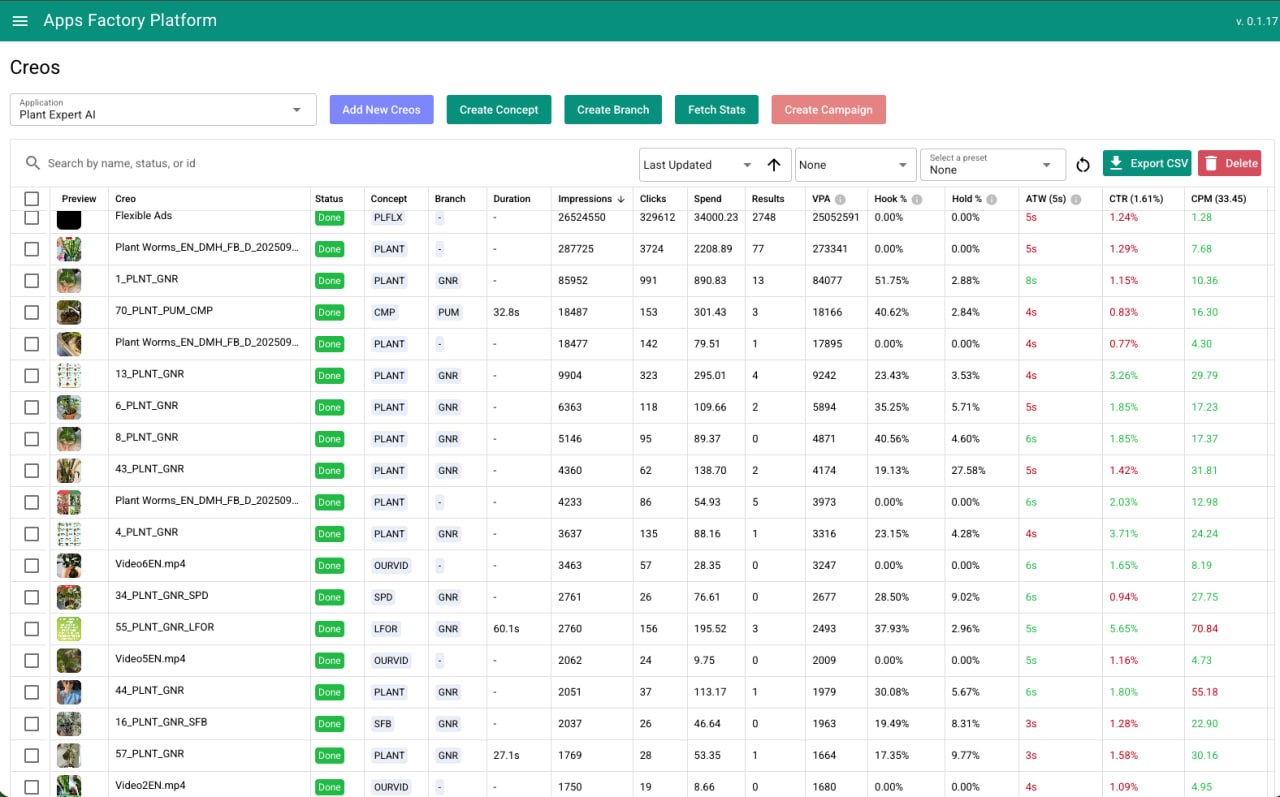
The tool enables real-time tracking of key metrics:
-
Retention
-
Cohorts (user cohorts)
-
Customer Acquisition Cost (CAC)
-
LTV (Lifetime Value) – key metrics that help optimize business processes and improve profitability in the long term.
In addition, classic metrics in media buying, such as CTR, CPC, CPM, and CPA, are used. This data is collected from several tracking platforms and is used to optimize ad campaigns. Analytics help the team make quick decisions, improve campaign efficiency, and scale only those hypotheses that show the best results from the unit economics standpoint. Thus, Apps Factory doesn’t just drive traffic – it closes the loop with apps by collecting data and passing it to App Studio for further product improvement and increased LTV.
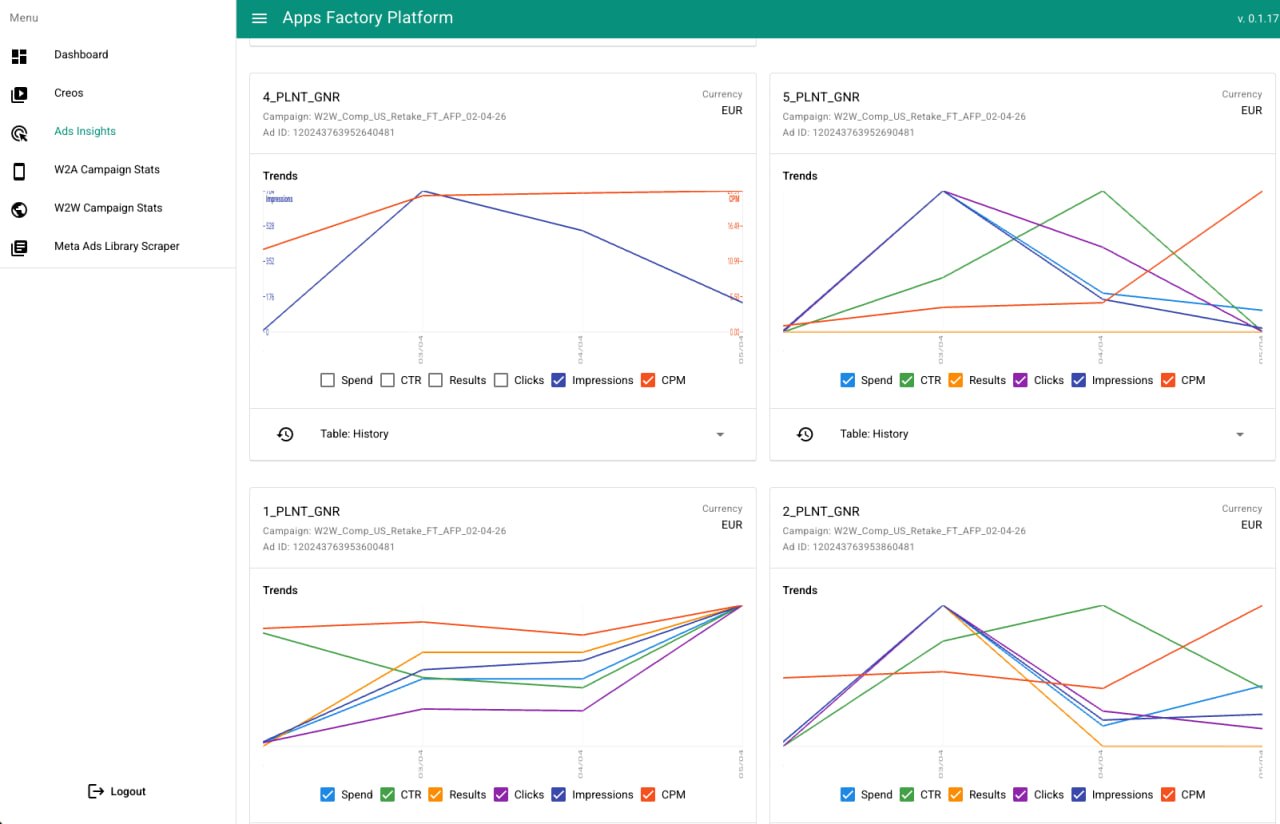
It’s crucial to use reliable tools and services when developing and promoting apps.
|
MMP – services for traffic attribution, tracking of installs and in-app user actions. |
Spy services – tools for ad analysis (creatives, offers, campaigns). |
Analytical platforms help to track user behavior and metrics (LTV, retention, funnels) for app optimization. |
The Mobile Apps team utilizes the best solutions for efficient work at every stage – from hypotheses to scaling.
Working with Partners
The main partners of Mobile Apps are traffic sources, dvertising agencies, buying teams, arbitrage specialists, and ad networks. Cooperation with our media buying team is possible in two key formats:
-
Providing our own offers. Partners can promote our products and subscription apps, being able to scale their ad campaigns on a tested infrastructure. Depending on the traffic quality and the working model, this can involve payment per install, trial, or subscription (CPA).
-
Purchasing traffic for external offers. We work according to the CPI model, where we buy traffic for specific actions (installations), the CPA model (trial or subscription), or an agency model with a fixed budget, where our team handles the entire user acquisition process with agreed KPIs and a 30% agency fee for management.
Thus, EVADAV Mobile Apps can either purchase your traffic or sell ours. Mediabuyers work according to two models.
CPA Model
The CPA (Cost Per Action) model is used in iOS applications. It involves paying the advertiser only when the user performs a targeted action: installation (CPI), sign-up and trial (CPT), or subscription purchase (CPS). This ensures payment for a real result rather than for clicks or impressions.
How the process works:
-
A target action is defined (typically subscription sign-up), and a price for it is set.
-
Traffic is attracted, usually through ads placed in social media, blogs, or other apps.
-
The user performs the action: clicks the link, installs the app from the App Store, and completes the required action.
-
Tracking and payment: a tracking system ( such as AppsFlyer) records the action, and the developer pays the partner commission.
RevShare Model
In Android apps, we use not only the subscription model but also the advertising-based RevShare monetization model. This means that we show ads inside the apps through Google AdMob, AppLovin, Waterfall, Interstitial, etc. For each impression, click, or interaction, we receive income from ad networks. Then this revenue is shared: if the traffic comes from a partner, we share a portion of the earnings with them.
The key feature of this model is that the lead continues to generate revenue not just once, but throughout the app's entire usage. This makes the economics more stable, allowing us to scale purchases and work with a broader audience, while partners receive a long-term income stream rather than one-off payments.
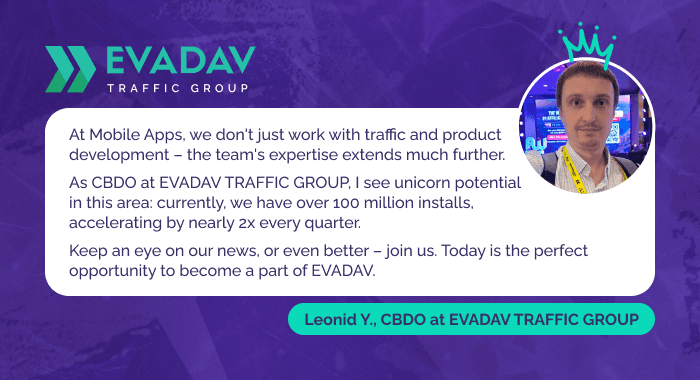
In Mobile Apps, as in other company projects, the division led by the CBDO (Chief Business Development Officer) is responsible for business development and partner interactions. Please send your offers and ideas for collaboration, traffic sales and purchases, and app development to [email protected]
More details – in the Mobile Apps project presentation.
Career Opportunities at Mobile Apps
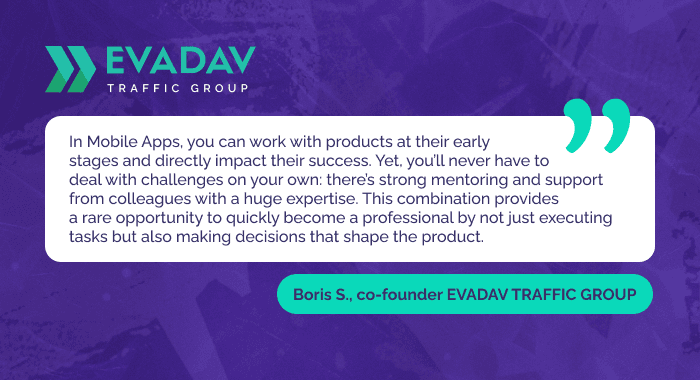
Our company offers unique opportunities for specialists who want to grow in expertise by working with multiple products simultaneously and participating in their early-stage launches.
At Mobile Apps, you don't just connect to an already completed solution – you work at the stage of product formation. Participate in hypothesis testing, influence key decisions, and see how your actions directly reflect on the result. This experience significantly accelerates professional growth, develops product thinking, and gives insight into the entire product economy from idea to monetization.
If you want to feel involved and know that your contribution matters, Mobile Apps is exactly the place where it’s possible. Our project is growing rapidly, and we always have open vacancies – check them out here.
Advantages of working in Mobile Apps:
-
It is part of EVADAV TRAFFIC GROUP, a holding with over 20 years of experience. We provide a well-established infrastructure, extensive opportunities, and support in career growth for employees. We have deep expertise in mobile app development and monetization.
-
The company is built on four core values: results, growth, consistency, and team, which help us reach business goals and boost expertise. We focus on real achievements and metrics through coordinated professional work.
-
Millions of creatives are crafted and tested monthly thanks to a well-established infrastructure and advanced tools, enabling us to quickly find effective combinations and scale ad campaigns.
-
An innovative approach to creatives and the use of AI in advertising, which significantly enhances the effectiveness of ad campaigns.
-
More than 150 traffic sources, including Meta, TikTok, Bigo, X, YouTube, Snapchat, Pinterest, Discord, Likee, Kwai, and others.
-
Process automation and the use of powerful in-house analytics for systematic product improvement and profitability enhancement.
-
Our team works at the intersection of product, marketing, and analytics, allowing us not only to drive traffic but to build sustainable economics and long-term growth for applications.
Conclusion
Our team operates at the intersection of product, marketing, and analytics, allowing us not just to drive traffic, but to build sustainable unit economics and long-term growth for mobile products. We combine strong expertise, well-established processes, and our own infrastructure to quickly identify winning hypotheses and scale them into measurable results.
For partners, this means access to high-quality traffic, proven funnels, and efficient monetization. For users, it means convenient and valuable apps that genuinely solve real-life problems and deliver everyday value.
For professionals, Mobile Apps offers the opportunity to work with products at early stages, influence key decisions, and rapidly grow their expertise with the support of a strong team in a company with over 20 years of market experience.
We are open to collaboration—whether you are an app owner, a media buying team, or an advertising network. Learn more about the Mobile Apps project and apply here: https://evadav.com/mobile-app-advertising
If you are looking to scale your product, test new user acquisition approaches, or build an effective monetization strategy, our team is ready to step in and deliver a solution tailored to your goals